
From Weibo to Aotearoa: How Chinese Social Media Shaped NZ Travel
How Weibo, Xiaohongshu and WeChat became unofficial NZ travel guides for Chinese visitors -- and what they reveal that English-language resources miss.

We learned to plan New Zealand road trips on Weibo before we learned to drive on the left. For Chinese visitors and residents alike, the platforms that shaped how we imagined this country were never Google or Lonely Planet — they were Xiaohongshu posts with ten-image itineraries, WeChat groups where someone”s cousin warned us about the gravel road past Omarama, and Weibo reblog chains that turned a student”s photo of Mount Cook into a shared dream. The Chinese social media ecosystem built an entire parallel guidebook to Aotearoa, and most English-speaking New Zealanders have no idea it exists.
The Platforms That Became Our Travel Agents
Weibo’s Golden Age of NZ Tourism
Before there were polished Xiaohongshu itineraries or Douyin montages set to piano covers, there was Weibo — and for a few crucial years, it was how Chinese visitors first imagined New Zealand. The format was simple: a photo of Lake Pukaki or Milford Sound, a few hundred characters of breathless caption, and a reblog chain that could carry a single image across millions of feeds in a day. We remember scrolling through those posts in 2013, 2014 — half of us were students in Auckland or Christchurch, posting our own weekend drives south, and the other half were still in China, saving screenshots of routes we had never driven.
Tourism New Zealand caught on faster than most national tourism boards. Their official Weibo account ran campaigns around Hobbiton and the Southern Lakes that hit at exactly the right moment, when outbound Chinese tourism was surging and New Zealand was still exotic enough to generate genuine curiosity. Chinese students became accidental travel ambassadors — our flatmate”s photo of Aoraki/Mount Cook got reblogged eight thousand times, and she was just trying to show her parents she was eating properly. The platform rewarded spontaneity and emotional honesty in a way that later, more polished platforms would not. That golden age peaked around 2016 or 2017, before Weibo”s algorithm started favouring paid content and celebrity posts over ordinary travellers” snapshots.
Xiaohongshu and the Rise of the Visual Itinerary
Xiaohongshu changed the game by demanding more. Where Weibo was a postcard — a single stunning photo and a reaction — Xiaohongshu (xiaohongshu, literally “little red book”) wanted the full package: curated photo grids, detailed itineraries broken down by day, exact cafe names and addresses, what to wear for the best photos at That Wanaka Tree, and which angle of the Queenstown waterfront catches the afternoon light. The platform rewarded effort and specificity, and NZ travel content rose to meet it.
The demographic shifted too. Xiaohongshu”s core audience skews younger and more female than Weibo”s, and the content reflects that — lifestyle-forward, aesthetically deliberate, with an emphasis on the personal and the photogenic. A typical NZ travel post on the platform is not just “we went to Tekapo” but a ten-image essay covering the drive down from Christchurch, the lupins in season, a flat white at a specific lakeside cafe, and a night-sky photography tutorial. The level of practical detail embedded in these posts routinely exceeds anything on Lonely Planet or TripAdvisor.
For Chinese visitors planning a New Zealand trip today, Xiaohongshu is often the first stop — not Google, not any English-language site. The platform has become an unofficial guidebook, written collaboratively by thousands of visitors who treat trip documentation as a creative act.
WeChat Groups Where the Real Tips Live
The most useful Chinese-language NZ travel information does not live on any public platform. It lives in WeChat groups — semi-private chat rooms organised by city, by interest, or by the year you arrived. There are groups for Auckland”s Chinese community that have been running for years, groups specifically for people driving the South Island in campervans, groups for working holiday visa holders who swap tips about fruit-picking seasons and cheap accommodation. Membership is by invitation or QR code scan, and the conversations are unfiltered in a way that public social media never is.
This is where someone asks “is the Interislander ferry worth it or should we fly?” and gets fifteen answers within an hour, most of them from people who made the crossing last month. This is where you learn that a particular rental car company in Christchurch has a reputation for hidden charges, or that the hot pools at a certain holiday park are underwhelming despite the glossy photos online. The trust dynamic is different from public reviews — these are people in your extended network, vouched for by mutual contacts, and the advice carries the weight of personal recommendation.
We have been in these groups for years. The quality of intelligence is remarkable — practical, specific, unsparing. It is the digital equivalent of the advice you would get from a well-travelled cousin, except the cousin is three hundred people who all drove the same road last summer.
What Gets Shared and What Gets Lost
The Algorithm’s Version of New Zealand
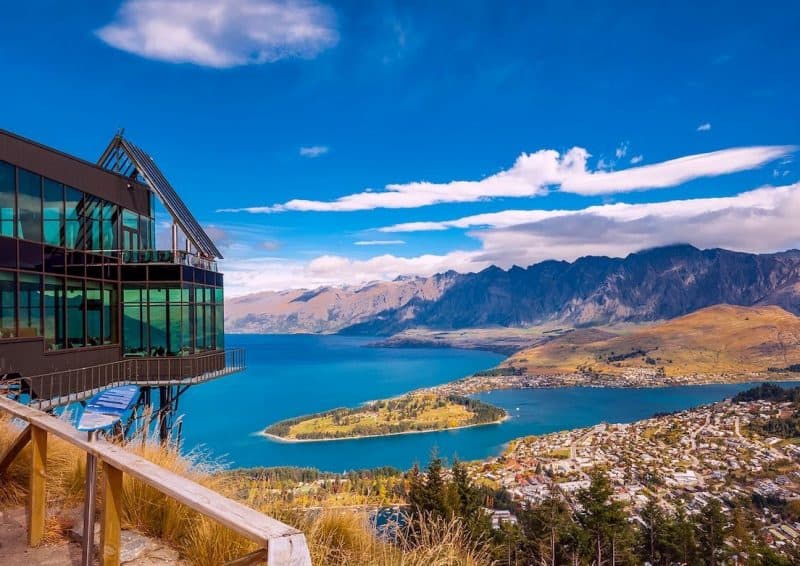
Every social media platform has an opinion about what New Zealand looks like, and those opinions are remarkably consistent. On Xiaohongshu, NZ is Queenstown in autumn, Wanaka in any season, Tekapo”s lupins in December, and Milford Sound in dramatic weather. On Douyin, it is drone footage of braided rivers and time-lapses of sunrise over Roys Peak. The algorithm does what algorithms do: it shows people what people like, which means it shows people what people have already liked, which means a small number of photogenic locations get amplified until they represent the entire country.
The feedback loop is powerful. A Chinese traveller researching New Zealand on Xiaohongshu sees Queenstown in sixty percent of the posts. They visit Queenstown, post about it, and the algorithm pushes their content to the next researcher. Meanwhile, the Wairarapa, Taranaki, and the East Cape remain almost invisible — not because they are less beautiful, but because they have not yet entered the viral cycle. The Chinese social media version of New Zealand is geographically narrow in the same way that the Instagram version is, but the specific locations are not always the same. Instagram made Roys Peak famous in the English-speaking world before Xiaohongshu did; Xiaohongshu made the Tekapo church famous in the Chinese-speaking world before most English-language travel blogs paid it much attention.
The Places That Go Viral and the Places That Don’t
The Church of the Good Shepherd at Lake Tekapo is the clearest example of the viral distortion effect. After countless Xiaohongshu posts framed it against the turquoise lake and the Southern Alps, the church became almost compulsory for Chinese visitors — a must-photograph stop on any South Island itinerary. At peak season, the queue to take a photo at the specific angle that matches the viral posts can stretch for twenty minutes. The church eventually installed multilingual signage — including Mandarin — asking visitors to be respectful of its function as an active place of worship.
Meanwhile, the Catlins coast sits three hours south with virtually no presence on Chinese social media. The Forgotten World Highway in Taranaki, the Chatham Islands, the Mackenzie Country backcountry beyond the main highway — these places barely register. The pattern makes sense when you examine what goes viral: a single, photogenic, identifiable landmark that fits in a portrait-orientation photo and has a name that translates well. A diffuse coastal landscape spread across sixty kilometres of gravel roads does not compress into a Xiaohongshu grid.
Accessibility matters too. The places that go viral tend to be the ones accessible from standard tour bus routes — a detail that says as much about the structure of Chinese group tourism as it does about the platforms themselves.
When Chinese-Language Reviews Are the Only Honest Ones
There is a useful counterweight to the algorithm”s distortions, and it lives in the blunt honesty of Chinese-language reviews. The cultural norms around reviewing are different. English-language review culture — particularly on platforms like TripAdvisor — tends toward politeness, even when the experience was poor. A mediocre restaurant gets three stars and a careful note about how “the service could have been warmer.” On Chinese platforms, the same restaurant gets a direct assessment: the food was bland, the portions were small, the price was unreasonable for what you received.
This candour makes Chinese-language reviews genuinely valuable, even for readers who are not Chinese. A Xiaohongshu review of a tourist attraction will tell you plainly if it is overpriced, if the reality does not match the marketing photos, if the drive is not worth the time. There is less social pressure to be kind about a commercial experience, and the result is a body of travel intelligence that is often more practically useful than its English-language equivalent.
Google Translate has made some of this accessible to non-Chinese readers, though the nuances get lost. The specific slang, the cultural references, the precise shade of disappointment in a review that says a scenic spot was “just so-so” (yiban yiban, which carries more resigned weariness than the English translation suggests) — these do not survive automated translation well. But the factual assessments do, and any NZ tourism operator would learn something from reading what Chinese visitors actually write about their experiences.
The English-Language Gap
What TripAdvisor and Lonely Planet Miss
English-language NZ travel resources were not built with Chinese travellers in mind, and the gaps show in ways that might not be obvious to their creators. TripAdvisor”s restaurant listings do not note whether a place offers Chinese-language menus or caters to Chinese dietary preferences — information that is trivial to include and genuinely useful for a Chinese family navigating an unfamiliar food landscape. Lonely Planet”s NZ guide assumes readers understand what BYO means at a restaurant, know that tipping is not expected, and will not be startled by the extreme informality of Kiwi customer service. These are not complaints — they are observation gaps that arise when content is written by one cultural group for an assumed audience within the same group.
The driving guides are a particular blind spot. Chinese licence holders face specific challenges with New Zealand”s road rules — left-hand driving, give-way conventions, the unwritten protocols of single-lane bridges, and the sheer remoteness of some routes where cell coverage vanishes for hours. English-language driving resources address these topics generically, but the specific anxieties of a Chinese driver encountering gravel roads or aggressive merging traffic for the first time go unacknowledged. These practical details are exactly the kind of information that Chinese social media fills in — not because the platforms are better, but because the contributors have lived the experience.
Mandarin Resources That Actually Work
The official channels have made genuine efforts. Tourism New Zealand”s Chinese-language presence is substantial — Mandarin-language content across multiple platforms, partnerships with Chinese travel influencers, and campaign activations timed to Chinese holidays and travel seasons. Some regional tourism boards have invested meaningfully too: Queenstown and Rotorua both maintain Mandarin microsites that go beyond simple translation to offer culturally relevant content. The Department of Conservation has translated key safety information for popular tracks, recognising that backcountry safety messaging needs to reach every visitor regardless of language.
The quality varies, though. Some official Mandarin content reads like it was written in English first and translated afterward, which it often was. The sentence structures, the cultural assumptions, the way information is prioritised — it still feels like a Kiwi resource wearing a Mandarin costume rather than a resource built for Chinese readers from the ground up. You can sense the difference immediately when you compare it to a Xiaohongshu post written by someone who actually stood at the trailhead and thought “what would my parents need to know before they walked this?”
The most trusted Mandarin-language NZ content often comes from bilingual Chinese-NZ residents who create independently — bloggers, video makers, community group administrators. They write from lived experience in both cultures, and that dual fluency shows. Their content anticipates questions that official resources do not think to ask, because they have fielded those questions from their own family members.
Two Information Worlds, One Country
When Your Mum Plans a Trip from Guangzhou
Here is a scene most Chinese-NZ families will recognise. Your mum announces from Guangzhou that she and your auntie are coming to visit in March. She has been planning for weeks. She shows you her itinerary over a video call and it is entirely sourced from Xiaohongshu and Mafengwo — three days in Queenstown, a day at Hobbiton, a side trip to the lavender farm that went viral last year, and a shopping list of specific skincare products to buy at Chemist Warehouse because a Douyin influencer said they were cheaper in New Zealand.
You look at her itinerary and it does not match any trip you would plan. You have lived here for seven years. Your New Zealand is the Wairarapa on a clear weekend, the Kapiti Coast when the gannets are diving, a particular dumpling place in Dominion Road that never appears on any platform because the owner does not believe in social media. Your research happened in English — Google searches, local newspaper recommendations, word of mouth from Kiwi colleagues.
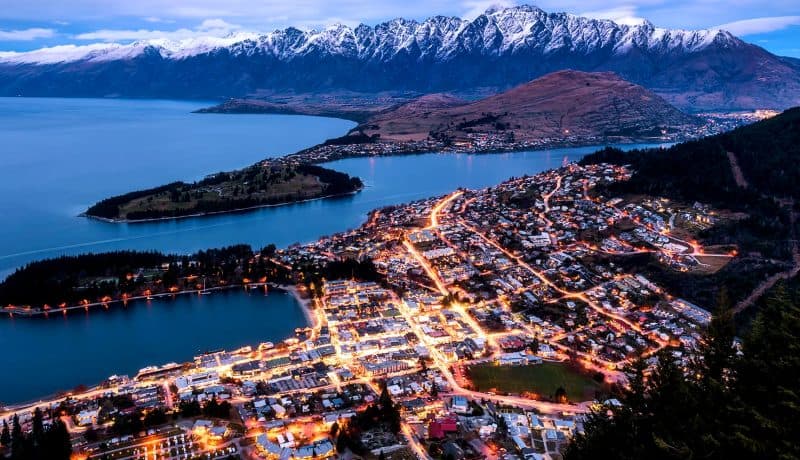
The two itineraries overlap at Queenstown and diverge everywhere else. Your mum has a more detailed plan for Tekapo than you have ever constructed for anywhere, but she has never heard of the place you go every long weekend. The family dinner where you merge the two plans is an exercise in navigating two completely different versions of the same country — and neither version is wrong, exactly. They are just built from different information.
Building Bridges Between the Feeds
The gap between the two information ecosystems is narrowing, slowly and mostly from the edges. Bilingual content creators operate in both worlds — posting on Xiaohongshu in Mandarin and on Instagram in English, sometimes about the same trip, with the framing adjusted for each audience. Screenshots travel between platforms: a particularly useful Xiaohongshu itinerary gets translated and shared in English-language travel forums, and an English-language hiking blog gets summarised in a WeChat group. The boundaries are porous in a way they were not five years ago.
The Chinese-NZ community sits at the centre of this convergence, whether we chose that role or not. We read both feeds. We translate for our parents and explain to our Kiwi friends why Tekapo is suddenly so busy. We know which Xiaohongshu recommendations are worth following and which are sponsored content dressed as personal experience. This bilingual, bicultural vantage point is not unique to us — any immigrant community develops it — but it is particularly relevant in the travel information space because the two ecosystems cover the same physical territory with such different maps.
A fully merged information landscape is probably neither possible nor desirable — the platforms, the languages, and the cultural contexts are too different. But a better-connected one would mean more diverse itineraries on both sides, more honest assessments reaching wider audiences, and fewer travellers arriving at a single photogenic church to queue for a photo they have already seen a thousand times. The best travel intelligence has always been personal, whether it arrives via a WeChat voice message from your cousin or a conversation with a stranger at a campground kitchen. The platforms are just the latest medium for the oldest form of travel advice: someone who has been there, telling you what it was really like.
Somewhere right now, a university student in Chengdu is saving a Xiaohongshu post about the Routeburn Track to a folder called “New Zealand 2027.” Somewhere else, a Chinese-Kiwi in Hamilton is explaining to their Pakeha partner why their visiting in-laws insist on photographing a specific church at a specific lake from a specific angle. The two information worlds will keep orbiting the same country at different speeds, occasionally crossing paths at a lookout point or a dumpling restaurant. The interesting question was never which ecosystem gets New Zealand right — it is what each one notices that the other does not.
2 Comments
The two itineraries thing is SO real. My umma planned her entire NZ visit from Naver Blog posts (Korean equivalent of Xiaohongshu basically) and her must-see list had zero overlap with mine. She had a specific cafe in Tekapo bookmarked that I had never heard of, and I could not convince her that the Wairarapa existed as a destination. We ended up doing her itinerary and honestly… some of her picks were better than mine. The parallel guidebook thing works both ways.
The point about Chinese-language reviews being more honest than English ones is interesting. Japanese review culture is similar — people on Tabelog will absolutely destroy a restaurant if it deserves it. I have started reading the Xiaohongshu reviews (my Mandarin is ok from living in Auckland) for NZ places before I check Google and they are way more useful for knowing what is actually worth the drive.